
Spainish > English
Hola
Hello
Adios
Goodbye
Please
Por favor
Si
Yes
Gracias
Thank You
Yo soy
I am
No entiendo
I don’t understand
No lo se
I don’t know
Me entiendes
Do you understand me
Solo un poco
only a little
Lo siento
Sorry
Disculpe
Excuse me
Soy Buena
Im good
Puede ayudarme
Can you help me
Ayuda
Help
Puede repetirlo
Can you say that again
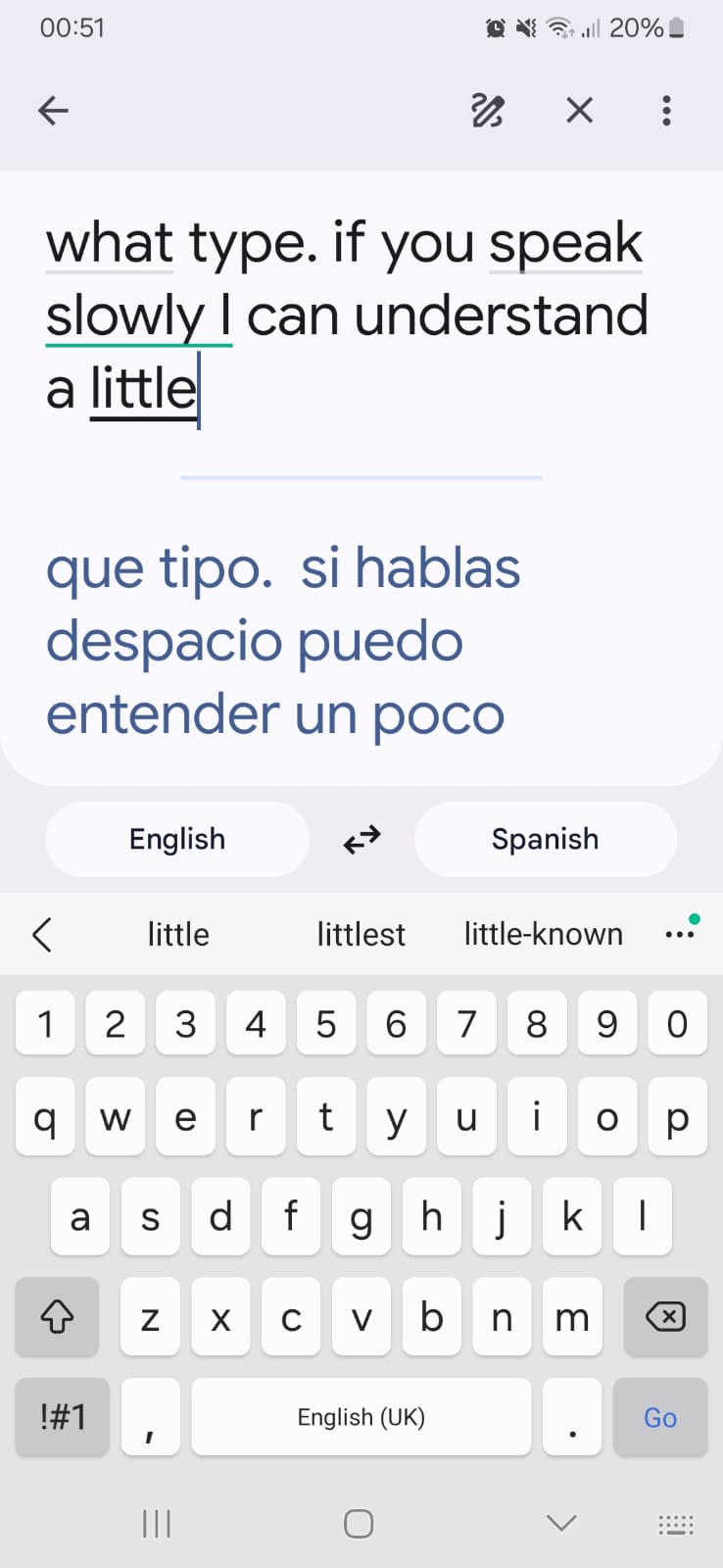
Puedes hablar mas lenta por favor
Can you speak slower please
Cual
Which
Como
how
Siempre
always
Nunca
never
Tal vez
later
Que
What
Quien
Who
Cuando
when
Donde
where
Por que
why/because
De nada
Your welcome
Me/te gusta
I/you like
Bien gracias
good thank you
Muy bien
very well
Asi, asi
So, so
Y tu
and you

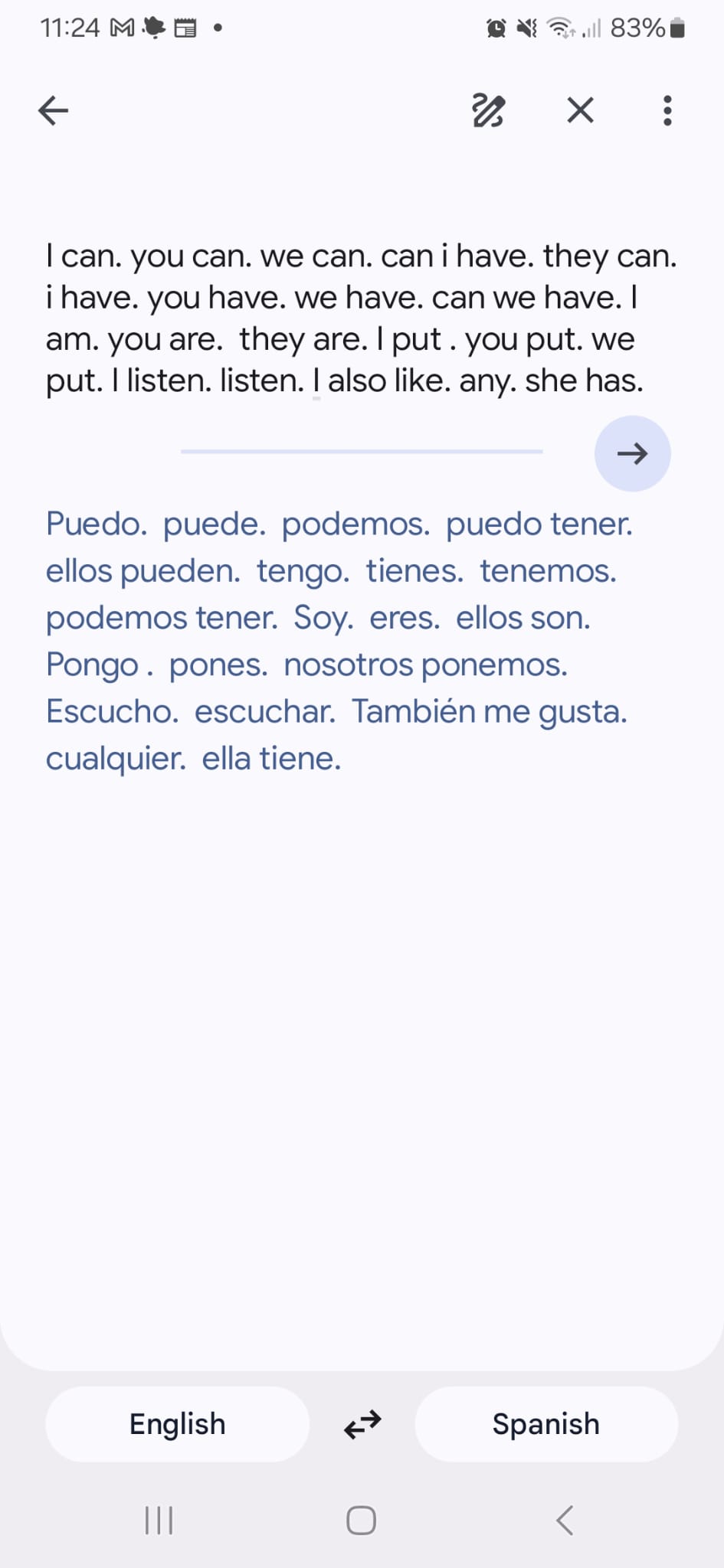
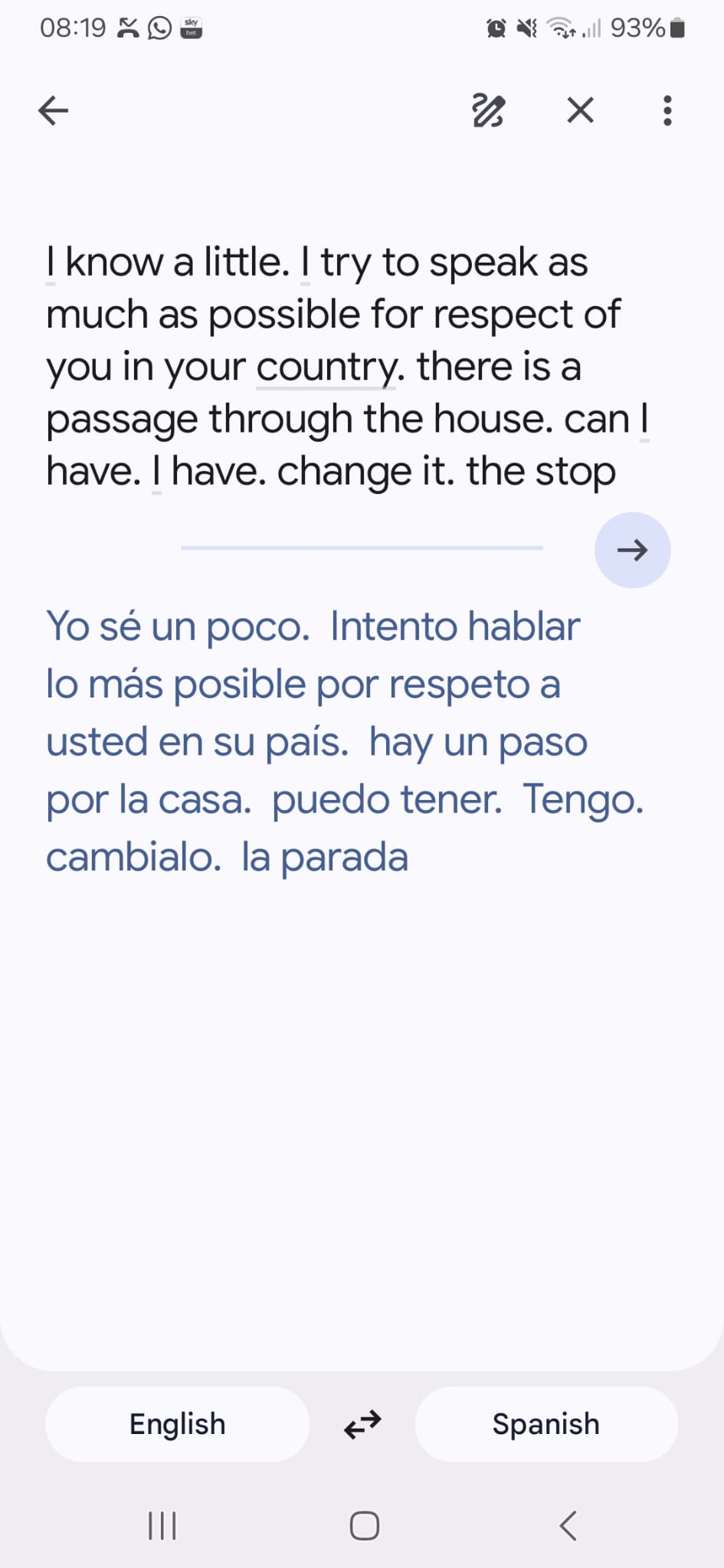
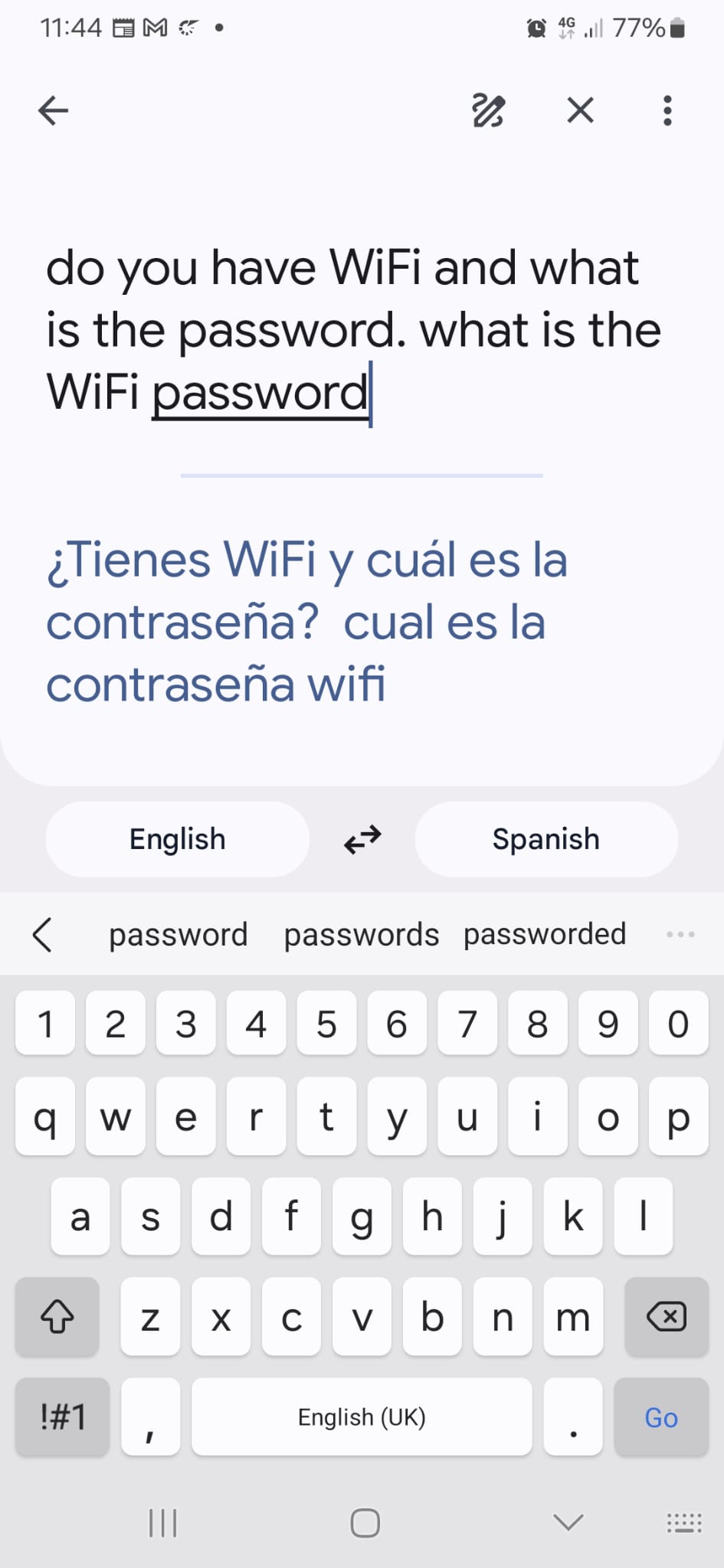

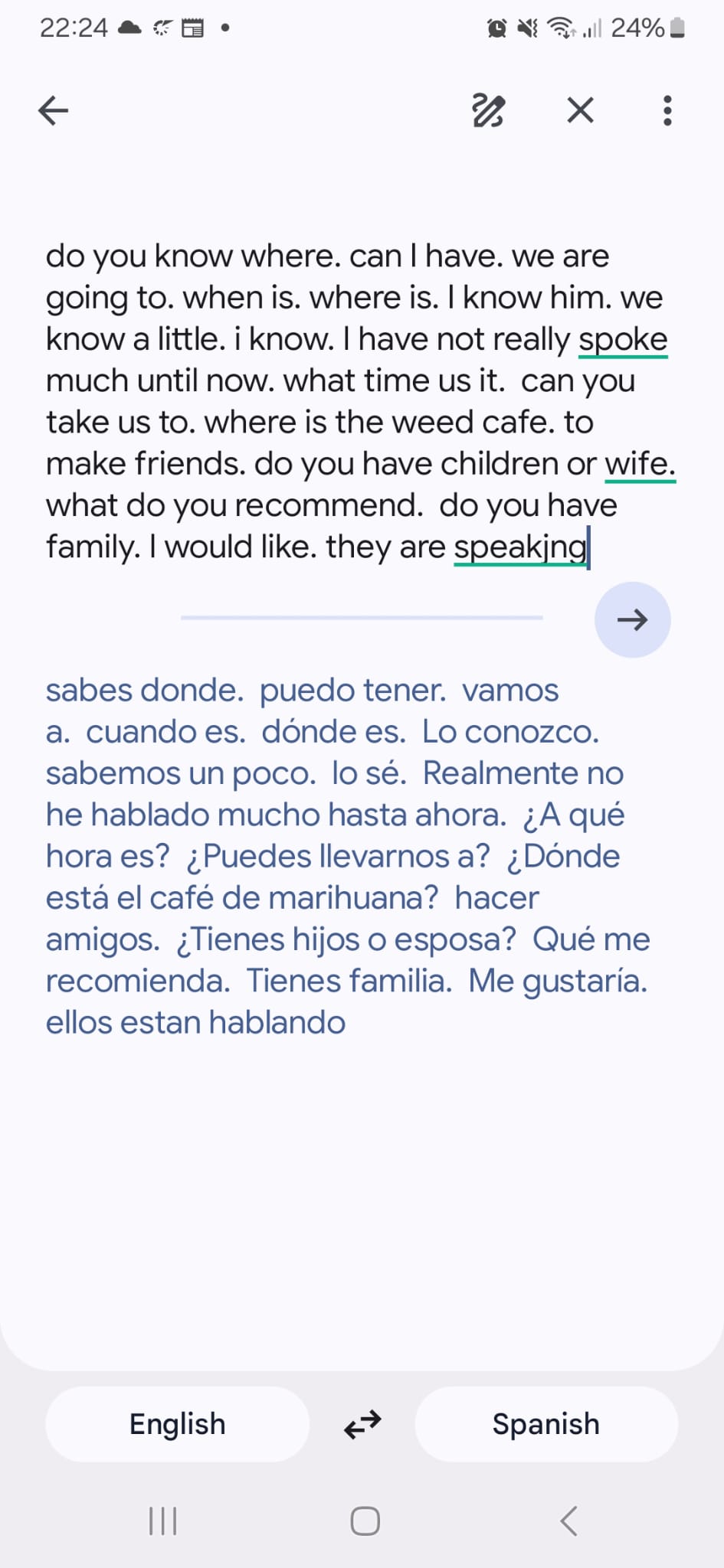


Spanish Verb Conjugations
Present Tense
| Pronoun | Ser (to be – permanent) |
Estar (to be – temporary) |
Ir (to go) |
Tener (to have) |
Hacer (to do/make) |
|---|---|---|---|---|---|
| Yo | soy | estoy | voy | tengo | hago |
| Tú | eres | estás | vas | tienes | haces |
| Él / Ella / Usted | es | está | va | tiene | hace |
| Nosotros | somos | estamos | vamos | tenemos | hacemos |
| Ellos / Ellas / Ustedes | son | están | van | tienen | hacen |
🇪🇸 1. SER – to be (permanent)
Present:
yo soy
tú eres
él/ella es
nosotros somos
vosotros sois
ellos son
(I was)
Preterite:
yo fui
tú fuiste
él/ella fue
nosotros fuimos
vosotros fuisteis
ellos fueron
🇪🇸 2. ESTAR – to be (temporary, location, feeling)
Present:
yo estoy
tú estás
él/ella está
nosotros estamos
vosotros estáis
ellos están
(I was)
Preterite:
yo estuve
tú estuviste
él/ella estuvo
nosotros estuvimos
vosotros estuvisteis
ellos estuvieron
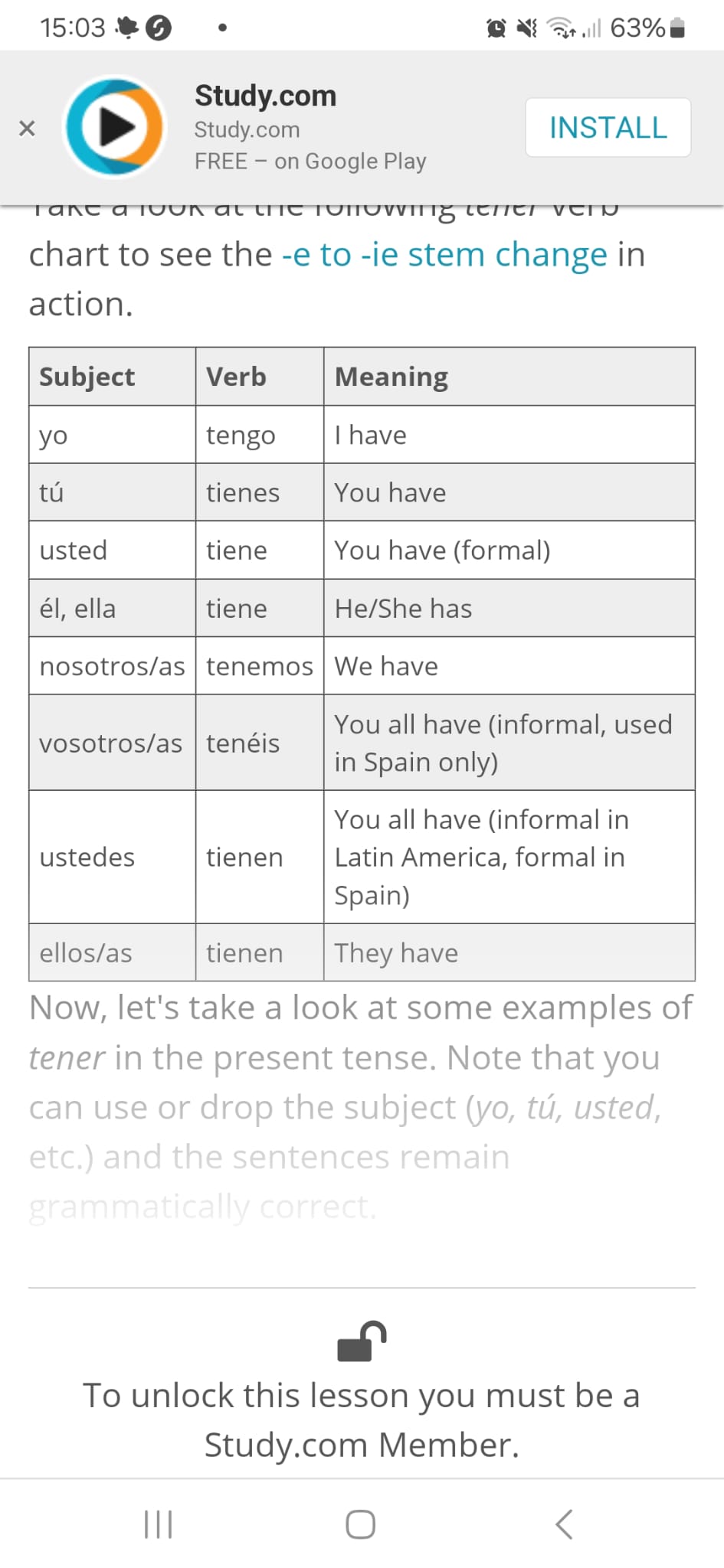
🇪🇸 3. TENER – to have
Present:
yo tengo
tú tienes
él/ella tiene
nosotros tenemos
vosotros tenéis
ellos tienen
(I Had)
Preterite:
yo tuve
tú tuviste
él/ella tuvo
nosotros tuvimos
vosotros tuvisteis
ellos tuvieron
🇪🇸 4. HACER – to do / to make
Present:
yo hago
tú haces
él/ella hace
nosotros hacemos
vosotros hacéis
ellos hacen
(I Done)
Preterite:
yo hice
tú hiciste
él/ella hizo
nosotros hicimos
vosotros hicisteis
ellos hicieron
🇪🇸 5. IR – to go
Present:
yo voy
tú vas
él/ella va
nosotros vamos
vosotros vais
ellos van
(I Went)
Preterite:
yo fui
tú fuiste
él/ella fue
nosotros fuimos
vosotros fuisteis
ellos fueron
🇪🇸 6. DECIR – to say / to tell
Present:
yo digo
tú dices
él/ella dice
nosotros decimos
vosotros decís
ellos dicen
(I Said)
Preterite:
yo dije
tú dijiste
él/ella dijo
nosotros dijimos
vosotros dijisteis
ellos dijeron
🇪🇸 7. PODER – to be able / can
Present:
yo puedo
tú puedes
él/ella puede
nosotros podemos
vosotros podéis
ellos pueden
(I Could)
Preterite:
yo pude
tú pudiste
él/ella pudo
nosotros pudimos
vosotros pudisteis
ellos pudieron
🇪🇸 8. PONER – to put / to place
Present:
yo pongo
tú pones
él/ella pone
nosotros ponemos
vosotros ponéis
ellos ponen
Preterite:
yo puse
tú pusiste
él/ella puso
nosotros pusimos
vosotros pusisteis
ellos pusieron
🇪🇸 9. VENIR – to come
Present:
yo vengo
tú vienes
él/ella viene
nosotros venimos
vosotros venís
ellos vienen
(I Came)
Preterite:
yo vine
tú viniste
él/ella vino
nosotros vinimos
vosotros vinisteis
ellos vinieron
🇪🇸 10. VER – to see
Present:
yo veo
tú ves
él/ella ve
nosotros vemos
vosotros veis
ellos ven
(I Saw)
Preterite:
yo vi
tú viste
él/ella vio
nosotros vimos
vosotros visteis
ellos vieron
| Pronoun | Ser (be) |
Estar (be) |
Ir (go) |
Tener (have) |
Hacer (do) |
|---|---|---|---|---|---|
| Yo | soy | estoy | voy | tengo | hago |
| Tú | eres | estás | vas | tienes | haces |
| Él / Ella / Ud. | es | está | va | tiene | hace |
| Nosotros | somos | estamos | vamos | tenemos | hacemos |
| Ellos / Ellas / Uds. | son | están | van | tienen | hacen |
| Pronoun | Ser (was) |
Estar (was) |
Ir (went) |
Tener (had) |
Hacer (did/made) |
|---|---|---|---|---|---|
| Yo | fui | estuve | fui | tuve | hice |
| Tú | fuiste | estuviste | fuiste | tuviste | hiciste |
| Él / Ella / Ud. | fue | estuvo | fue | tuvo | hizo |
| Nosotros | fuimos | estuvimos | fuimos | tuvimos | hicimos |
| Ellos / Ellas / Uds. | fueron | estuvieron | fueron | tuvieron | hicieron |
| Pronoun | Ver (to see) |
Venir (to come) |
Poner (to put) |
Poder (to be able) |
Decir (to say) |
|---|---|---|---|---|---|
| Yo | veo | vengo | pongo | puedo | digo |
| Tú | ves | vienes | pones | puedes | dices |
| Él / Ella / Ud. | ve | viene | pone | puede | dice |
| Nosotros | vemos | venimos | ponemos | podemos | decimos |
| Ellos / Ellas / Uds. | ven | vienen | ponen | pueden | dicen |
| Pronoun | Ver (saw) |
Venir (came) |
Poner (put) |
Poder (was able) |
Decir (said/told) |
|---|---|---|---|---|---|
| Yo | vi | vine | puse | pude | dije |
| Tú | viste | viniste | pusiste | pudiste | dijiste |
| Él / Ella / Ud. | vio | vino | puso | pudo | dijo |
| Nosotros | vimos | vinimos | pusimos | pudimos | dijimos |
| Ellos / Ellas / Uds. | vieron | vinieron | pusieron | pudieron | dijeron |
| Pronoun | Hablar (to speak) |
Comer (to eat) |
Vivir (to live) |
|---|---|---|---|
| Yo | hablo | como | vivo |
| Tú | hablas | comes | vives |
| Él / Ella / Ud. | habla | come | vive |
| Nosotros | hablamos | comemos | vivimos |
| Ellos / Ellas / Uds. | hablan | comen | viven |
| Pronoun | Hablar (spoke) |
Comer (ate) |
Vivir (lived) |
|---|---|---|---|
| Yo | hablé | comí | viví |
| Tú | hablaste | comiste | viviste |
| Él / Ella / Ud. | habló | comió | vivió |
| Nosotros | hablamos | comimos | vivimos |
| Ellos / Ellas / Uds. | hablaron | comieron | vivieron |
Caminar – to walk
Trabajar – to work
Escuchar – to listen
Mirar – to look/watch
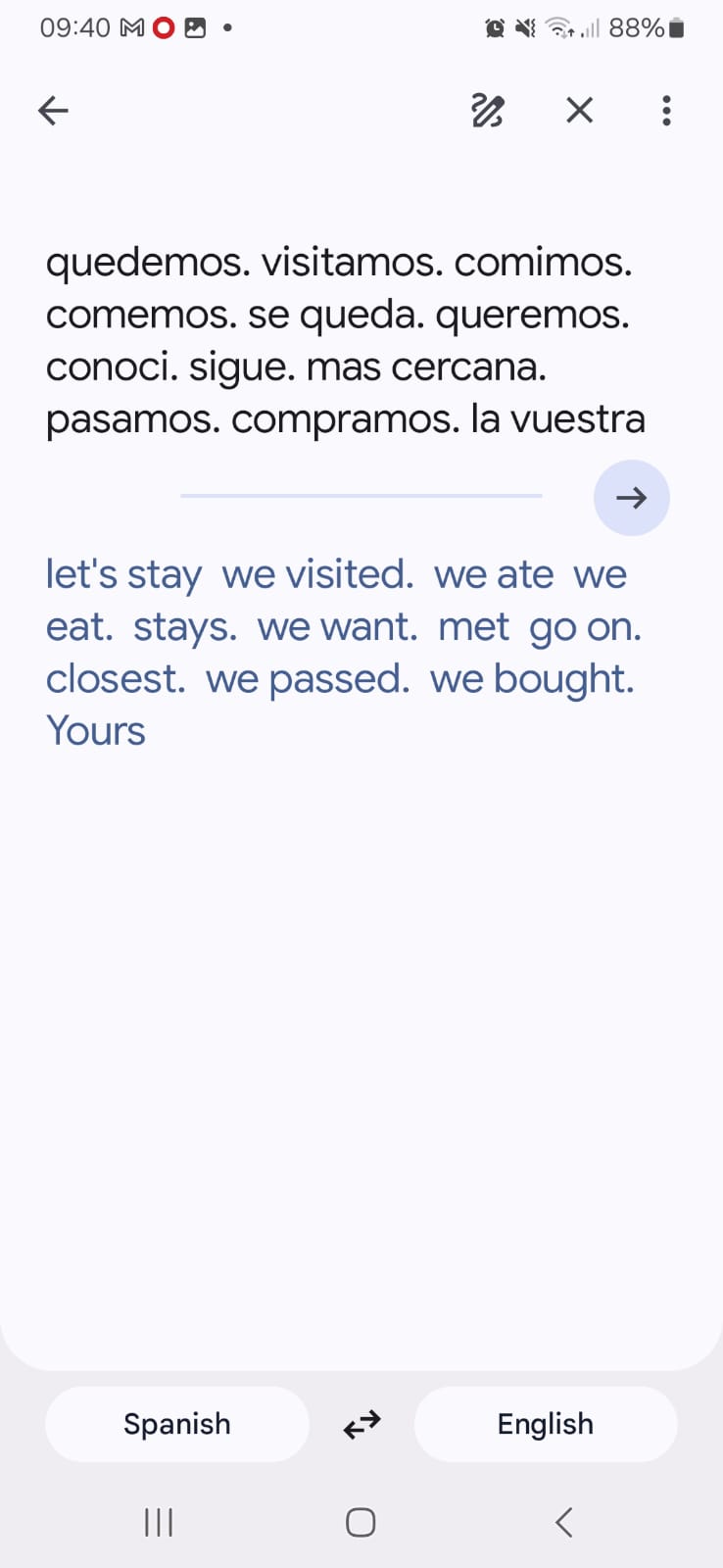
Comprar – to buy
Buscar – to search
Llamar – to call
Cocinar – to cook
Bailar – to dance
Estudiar – to study
Visitar – to visit
Viajar – to travel
Entrar – to enter
Tomar – to take/drink
Ayudar – to help
Usar – to use
Cambiar – to change
Limpiar – to clean
Dejar – to leave/let
Beber – to drink
Vender – to sell
Aprender – to learn
Correr – to run
Romper – to break
Meter – to put inside
Temer – to fear
Prometer – to promise
Responder – to respond
Depender – to depend
Comprender – to understand
Poseer – to possess
Creer – to believe (⚠️ regular except accents in preterite)
Deber – to owe / should
Prender – to turn on
Someter – to submit
Ofender – to offend
Esconder – to hide
Llover (only llueve, but regular conjugation pattern)
Escribir – to write
Abrir – to open
Recibir – to receive
Permitir – to allow
Decidir – to decide
Asistir – to attend
Insistir – to insist
Compartir – to share
Omitir – to omit
Subir – to go up/upload
Existir – to exist
Inscribir – to register
Cumplir – to complete/turn (age)
Admitir – to admit
Partir – to leave/cut
Imprimir – to print
Dividir – to divide
Descubrir – to discover
Sufrir – to suffer
SER (irregular)
Presente (yo): soy – Yo soy estudiante (I am a student)
Pretérito (yo): fui – Yo fui feliz ayer (I was happy yesterday)
ESTAR (irregular)
Presente (yo): estoy – Yo estoy cansado (I am tired)
Pretérito (yo): estuve – Yo estuve enfermo (I was ill)
TENER (irregular)
Presente (yo): tengo – Yo tengo un coche (I have a car)
Pretérito (yo): tuve – Yo tuve tiempo ayer (I had time yesterday)
HACER (irregular)
Presente (yo): hago – Yo hago ejercicio (I do exercise)
Pretérito (yo): hice – Yo hice la cena (I made dinner)
IR (irregular)
Presente (yo): voy – Yo voy al trabajo (I go to work)
Pretérito (yo): fui – Yo fui al mercado (I went to the market)
VENIR (irregular)
Presente (yo): vengo – Yo vengo temprano (I come early)
Pretérito (yo): vine – Yo vine ayer (I came yesterday)
PONER (irregular)
Presente (yo): pongo – Yo pongo la mesa (I set the table)
Pretérito (yo): puse – Yo puse el libro aquí (I put the book here)
PODER (irregular)
Presente (yo): puedo – Yo puedo ayudar (I can help)
Pretérito (yo): pude – Yo pude hacerlo (I managed to do it)
DECIR (irregular)
Presente (yo): digo – Yo digo la verdad (I tell the truth)
Pretérito (yo): dije – Yo dije eso ayer (I said that yesterday)
VER (irregular)
Presente (yo): veo – Yo veo televisión (I watch TV)
Pretérito (yo): vi – Yo vi una película (I saw a movie)